


You are at: Home page Her work Discography Songs of History and Heroes

Songs of History and Heroes
Contents
The retelling of fine, magnificent, heroic deeds from the past has always been, for all the nations of the world, the thread they follow to their future and the weft of which this future is woven. Austere and Doric, as stern as the heroes they describe, the songs called Historic could function as chronicles, but also as musical myths or to serve as a lesson in history.
CD 1
-
1. Forty brave young lads
Thrace More
-
2. When the City was founded
Crete More
-
3. The swallows of Vlachiá
Crete More
-
4. They took the City
Macedonia More
-
5. Old nun a-cooking
Thrace More
-
6. Great joy across the land
Crete More
-
7. How joyous are the mountains
Peloponnese More
-
8. When you dream of brave deeds
Macedonia More
-
9. A maid decided
Peloponnese More
-
10. In the heart of Kalávryta
Peloponnese More
-
11. Katsantónis
Epirus More
-
12. Rock of Monemvasiá
Peloponnese More
-
13. Girls of Kastoria
Macedonia More
-
14. What ails you, poor plane-tree?
Central Greece More
-
15. Androútsos' mother
Central Greece More
-
16. On Tríkorfa peak
Peloponnese More
-
17. On Tríkorfa peak
Peloponnese More
-
18. A great command
Macedonia More
CD 2
-
1. Forty klephts are we
More
-
2. I passed by one Saturday
Central Greece More
-
3. Great joy across the land
Peloponnese More
-
4. Hey Mountains of Grevená
Macedonia More
-
5. Kítsos' mother
Central Greece More
-
6. Lament
Epirus More
-
7. All the captains' women
Epirus More
-
8. At Tserítsiana’s well
Epirus More
-
9. I passed by a day or two ago
Peloponnese More
-
10. All the castles I have seen
Peloponnese More
-
11. Turks hold your horses
More
-
12. Tartar with a chain
Peloponnese More
-
13. Nine villages they razed
Macedonia More
-
14. Up Siátista way
Macedonia More
-
15. Captain Loukas
Macedonia More
-
16. What ails you, poor Parnassós
Central Greece More
-
17. The captains of Trípoli
Peloponnese More
- Production: Domna Samiou Greek Folk Music Association
- Year of release: 2007
- Type: CD
- Sponsors: Stavros Niarchos Foundation
Notes
- Introduction by Domna Samiou
- ‘Unhappy souls are wont to sing airs in keeping with their state…’ by Miranda Terzopoulou
I believe our traditional songs came into being hand in hand with the events they describe. Every time something stirred or shocked the people, they’d make a song to express how it made them feel. So it’s only natural that it was wars, battles and deaths that most often instilled the desire to make a song; a song expressing the people’s pain and its admiration for the heroic men and women touched by glory.
Travelling the highways and byways of Greece, I have recorded hundreds of songs, many with historical themes. Dating back to the 13th century and the Sack of Adrianoúpolis and forward as far as World War Two, most deal with the centuries of Turkish rule, and the armatoloi and klephts, the brave and independent bands that roamed the Greek highlands and were ever in the frontline against the Ottoman invader.
I came across most in Central Greece and the Peloponnese, fewer on the islands.
Austere and Doric, as stern as the heroes they describe, for the folk who made them and their contemporaries these songs were the newspapers and the chronicles of their day. For the generations that followed, they served as a lesson in history.
Domna Samiou (2007)
Translated by Michael Eleftheriou
Unhappy souls are wont to sing airs in keeping with their state…*
The retelling of fine, magnificent and heroic deeds from the past has always been, for all the nations of the world, the thread they follow to their future and the weft of which this future is woven.
In Greece, a small war-torn country which, like all nation-states, had need to seek constant recourse to a glorious past either joyous or painful, those songs telling of events or legends linked to specific, recognizable historical periods played unique a role: they served as nothing less than a vast field of national initiation.
Folklorists, who categorize songs using criteria that bear little or no relation to their importance to the people that sing them, labeled as ‘historical’ those songs that centre on ‘events’; events that are usually martial: battles, cities besieged and sacked, the feats – and, more often than not, the heroic death – of famous men. The ‘klephtic’ songs fall into this extensive category, too, the only difference being that they refer to people and situations from a specific historical era and geographical area: to the struggle waged against Turkish rule by the irregular bands of klephts and armatoloi in mainland Greece.
Despite their official titles, these songs contain very little – if any – historical fact, and what ‘fact’ there is, is vague and imprecise; indeed, one might best describe them as myth interwoven with history. Still, through their local variants, receptions and interpretations, these songs, more than any other popular art-form, became laden with ideological duties, cultivated collective memory, and contributed to the formation of a Greek national consciousness, identity and sense of local diversity. We could say that their actual historical dimension had been acquired through use.
The power and impact ‘memory songs’ has always been inversely related to the social and political well-being of the people that sing them. When times are at their hardest, states at their most illiberal, human losses at their highest, such songs sustain the people and their vision, strengthen the thirst for freedom, instill the strength to fight, bolster faith in forgotten values and ideals and raise the morale of defeated men.
Functioning as musical myths gradually uncoupling from their historical genesis and inspiration, ‘memory songs’ remain open for every group and every generation to imbue them with new meaning, to make their old meaning pertinent to the present, to express their current needs through singing. One need only recall the enthusiasm a single song, ‘When will the stars shine bright’, has aroused in so many generations of Greeks in every corner of the land, and the range of allusions it has conjured up.
Time goes by with its continuities and discontinuities, its ruptures and upsets, and yet the singular time-sense of their land sees the Greeks singing collectively and ritualistically of Byzantine kings and heroes, Souliot women, klephts and World War Two guerillas – or rather lamenting them. All these they join in a mournful, heroic saga that remains a work in progress; a work from which men can draw what they need at a given point in time to condemn, revivify or defuse national or societal issues. It is as though they are filling in the gaps and silences in our written history.
It goes without saying that in these CDs Domna uses primarily musical criteria in order to convey the continuities of this saga through time. Still, whatever the criteria, their application constitutes a subjective act. Indeed, without this subjectivity a CD series entitled ‘Songs of history and heroes’ might well have failed to convey history as a lived experience, resulting in a collection devoid of any sense of location, time and history. As it is, this collection is profoundly personal. It bears the stamp of Domna Samiou’s distinctive musicality, life and praxis.
Miranda Terzopoulou (2007)
Translated by Michael Eleftheriou
* Dionysios Solomos
Multimedia
Videos
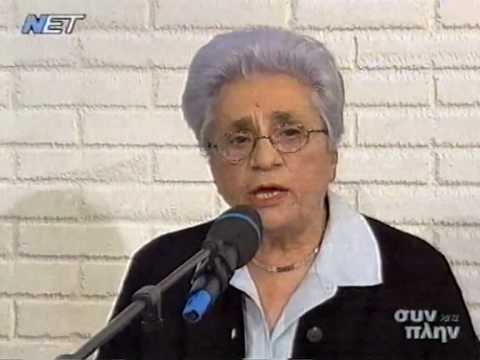
At Trikorfa peak
From the TV programme 'Syn ke Plin' - ERT 2002
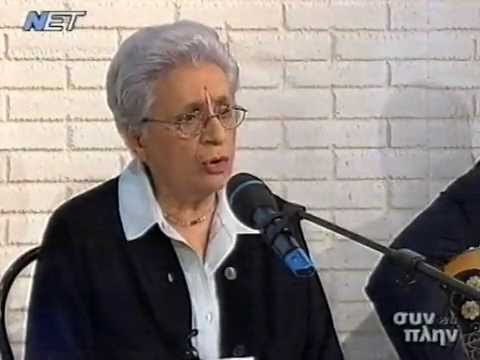
Forty brave young lads
From the TV programme 'Syn ke Plin' - ERT 2002
Credits
Production team
- Domna Samiou (Research, Collection, Musical supervision),
- Socrates Sinopoulos (Musical supervision),
- Daphne Djaferis (Production management),
- Tasia Papanikolaou (Production assistant),
- Yiorgos Ε. Papadakis (Musical advisor)
Sound team
- Yiorgos Karyotis (Sound engineer),
- Yiorgos Karyotis (Sound editing),
- Petros Siakavellas (Sound editing),
- Socrates Sinopoulos (Sound editing)
Booklet team
- Miranda Terzopoulou (Texts and commentaries),
- Michael Eleftheriou (English translation),
- Natassa Papadopoulou (Text Editing),
- Konstantina Ananidi (Design and layout),
- Christina Katsichti (Design and layout),
- Marina Orfanidou (Design and layout),
- Thomas Papanikolaou (Design and layout)
Singer
- Domna Samiou (All the castles I have seen, The captains of Trípoli, A great command, Androútsos' mother, Kítsos' mother, Old nun a-cooking, In the heart of Kalávryta, Tartar with a chain, Forty klephts are we, What ails you, poor Parnassós, Forty brave young lads),
- Yiorgos Bagiokis (Nine villages they razed),
- Boy (On Tríkorfa peak),
- Rina Dimouda (They took the City),
- Zacharias Karounis (A maid decided, Hey Mountains of Grevená, Up Siátista way, On Tríkorfa peak),
- Antonis Kyritsis (When you dream of brave deeds, I passed by one Saturday, At Tserítsiana’s well),
- Antonis Martsakis (Great joy across the land, The swallows of Vlachiá),
- Katerina Papadopoulou (Rock of Monemvasiá, Great joy across the land),
- Michalis Zambas (Katsantónis, All the captains' women),
- Ilias Zarokostas (I passed by a day or two ago)
Choir
- Cretans' Group (When the City was founded),
- Domna Samiou Greek Folk Music Association Choir (All the castles I have seen, A great command, What ails you, poor plane-tree?, How joyous are the mountains)
Clarinet
- Thodoris Georgopoulos (Rock of Monemvasiá, When you dream of brave deeds, I passed by one Saturday, What ails you, poor plane-tree?, At Tserítsiana’s well, Great joy across the land, In the heart of Kalávryta, A maid decided, How joyous are the mountains, Hey Mountains of Grevená, Forty brave young lads, Katsantónis, On Tríkorfa peak, Lament, All the captains' women),
- Dimitris Kotsikas (Captain Loukas, Girls of Kastoria)
Flute
- Thodoris Georgopoulos (All the castles I have seen, The captains of Trípoli, Kítsos' mother, Forty klephts are we)
Zournas
- Christos Batissis (Nine villages they razed)
Pipiza
Violin
- Achilleas Chalkias (Katsantónis, Lament, All the captains' women),
- Nikos Oikonomidis (Rock of Monemvasiá, The captains of Trípoli, When you dream of brave deeds, I passed by one Saturday, What ails you, poor plane-tree?, At Tserítsiana’s well, Great joy across the land, A maid decided, How joyous are the mountains, Hey Mountains of Grevená, Forty klephts are we, On Tríkorfa peak)
Thracian lyra
Constantinopolitan lyra
Kanun
Tambouras
Constantinopolitan lute
- Socrates Sinopoulos (What ails you, poor plane-tree?, Old nun a-cooking, A maid decided, Hey Mountains of Grevená)
Santur
- Ourania Lambropoulou (Rock of Monemvasiá, The captains of Trípoli, What ails you, poor plane-tree?, Great joy across the land, A maid decided)
Lute
- Kostas Philippidis (Rock of Monemvasiá, When you dream of brave deeds, I passed by one Saturday, What ails you, poor plane-tree?, At Tserítsiana’s well, Great joy across the land, A maid decided, How joyous are the mountains, Hey Mountains of Grevená, Katsantónis, On Tríkorfa peak, Lament, All the captains' women),
- Socrates Sinopoulos (The swallows of Vlachiá, Kítsos' mother, In the heart of Kalávryta, Turks hold your horses),
- Kyriakos Tapakis (The captains of Trípoli, Forty klephts are we)
Daouli (davul)
- Aristides Kotsikas (Captain Loukas, Girls of Kastoria),
- Kostas Meretakis (Up Siátista way),
- Andreas Pappas (Rock of Monemvasiá, All the castles I have seen, The captains of Trípoli, A great command, When you dream of brave deeds, I passed by one Saturday, Androútsos' mother, Kítsos' mother, Nine villages they razed, Great joy across the land, How joyous are the mountains, Forty klephts are we, What ails you, poor Parnassós, On Tríkorfa peak)
Goblet drum
Bendir (frame drum)
Tambourine
- Kostas Meretakis (Turks hold your horses),
- Andreas Pappas (At Tserítsiana’s well, Hey Mountains of Grevená, Katsantónis, All the captains' women)
Drum
- Christos Fotiadis (Captain Loukas, Girls of Kastoria)
Trombone
- Nikos Kardogiannis (Captain Loukas, Girls of Kastoria)
Cornet
- Nikos Chronis (Captain Loukas, Girls of Kastoria),
- Michalis Gatziouras (Captain Loukas, Girls of Kastoria)
Informant (source of the song)
- Dimos Aneziris (The captains of Trípoli),
- Rina Dimouda (They took the City),
- Father Panagiotis Nikidis (Forty brave young lads),
- Christos Panoutsos (On Tríkorfa peak),
- Maria Schoiná (What ails you, poor Parnassós),
- Yiorgos Tzitzos (A great command),
- Roula Tzitzou (A great command),
- Ilias Zarokostas (I passed by a day or two ago)